

Stefano Fagnani, Paolo Arosio, Federico Arosio, and Matteo Sartori
In the field of implantology, technological evolution aims to identify design as a key element for increasing the quality, predictability, and survival of rehabilitation.
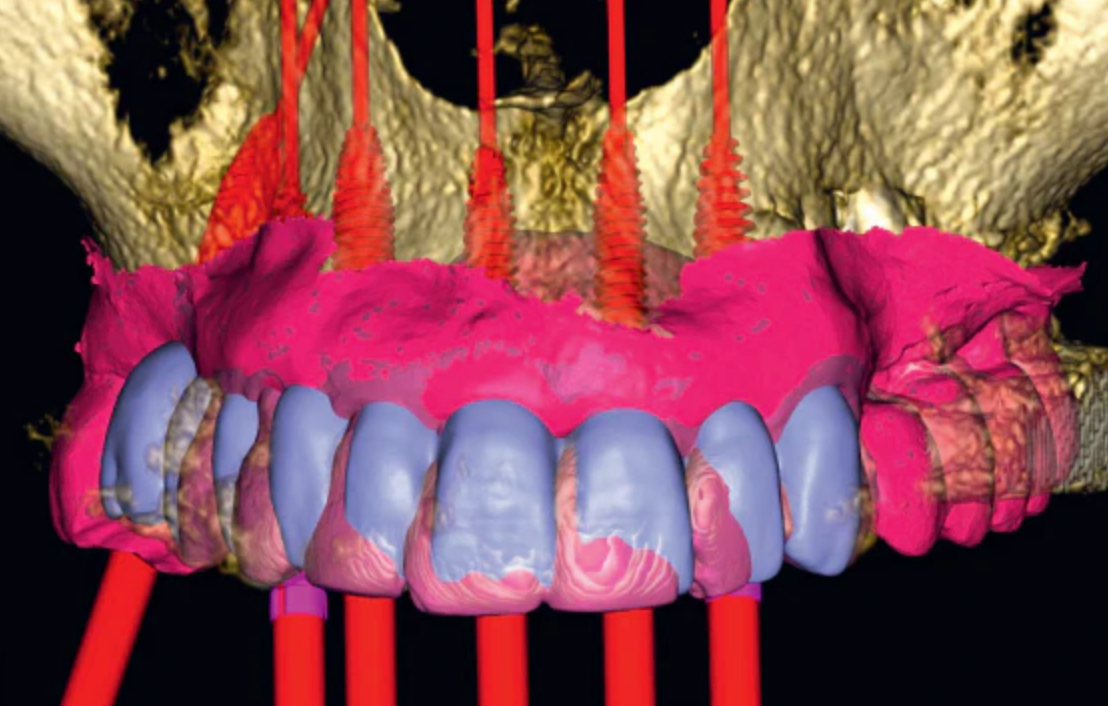
Tools such as CBCT, intraoral scanning, and facial scanners, integrated with each other, create a virtual image of the patient that allows for more precise planning of prosthetic rehabilitation and a consequent implant design consistent with the elements to be created and the available bone.
For the clinician, this phase is proving to be an essential diagnostic moment for evaluating possible surgical and prosthetic options, preemptively identifying any potential problems: the choice of intraosseous devices to apply, the need for osteoplastic or regenerative procedures, and the prosthetic options to apply immediately or after osseointegration.
For the patient, the advantages are represented by greater safety, information and awareness of what is proposed at a therapeutic level, thus being able to choose more effectively. calm and therefore adequately express one's consent.
Digitizing the patient therefore allows for virtual design of the final prosthesis and surgical simulation that minimizes the margin of error. However, performing a correct clinical procedure becomes a practical obstacle if this design cannot be accurately translated into the surgical and prosthetic phases.

Guided surgical techniques in implantology have been performed for several years now and have undergone continuous improvements thanks to experience gained and the evolution of materials.
The constant challenge, in fact, is to transfer the virtual project to the actual clinical case, minimizing errors in the various operations of tunnel preparation, implant insertion, and, where possible, prosthetic application. Guided surgery originally involved acrylic or thermoformed resin templates on diagnostic wax-ups or prosthetic mock-ups with holes or grooves to suggest to the implantologist where to place the implant. initial preparation corresponding to the future prosthetic emergency.
Order Quintessence International 1/2025 here and read our column DENTECHSTRY - The Special on Dental Innovation.


Share: