

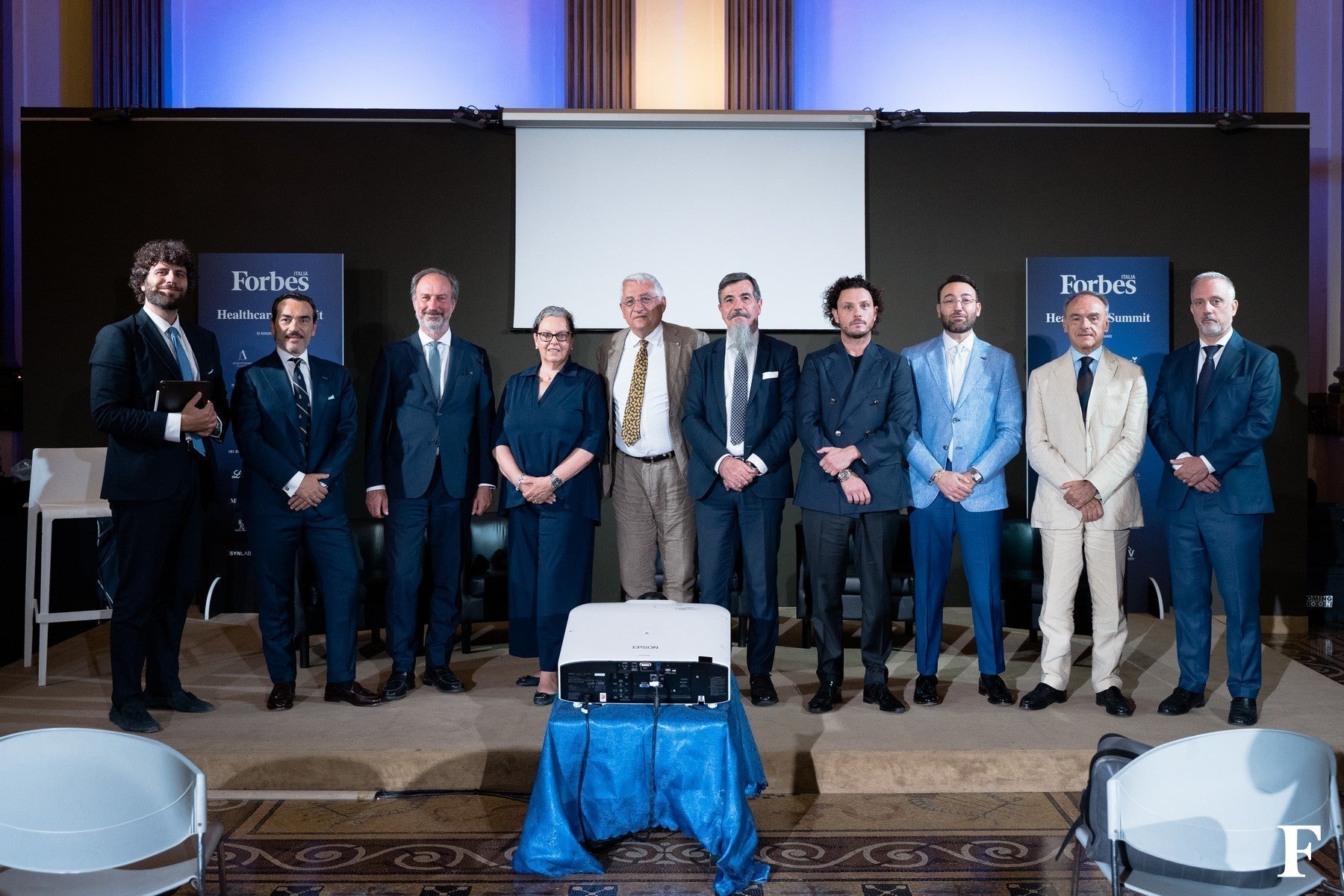
Healthcare Summit Forbes Italia 2026: Innovation, Research, AI, Prevention, and Sustainability of the National Health Service at the Center of Dialogue Between Institutions and Businesses
A full day, divided between morning and afternoon, yet united by a single guiding thread: how to live longer while living better. The Healthcare Summit, now in its third edition and organized by Forbes Italia, brought together institutions, the pharmaceutical industry, public research, and emerging models of care at Palazzo Wedekind in Rome to explore the new frontiers of health.
Proceedings were moderated by Antonio Ravenna, journalist at Forbes Italia, while the event was opened by Nicola Formichella, CEO of Forbes Italia, who explained the rationale behind an initiative now in its third edition: “Forbes focuses on this topic because we aim to highlight excellence and, through our storytelling, create moments of inspiration for younger generations. Today, we want to outline possible future scenarios for this sector by involving those who lead it every day.
The healthcare sector in Italy is of great importance, especially as life expectancy has increased. We must learn how to live those additional years in the best possible way. With the Healthcare Summit, now in its third edition, we aim to understand—through dialogue and the insights of key players in the sector—what the future scenarios of healthcare may look like.”
A video contribution was delivered by the Undersecretary of State for Health, On. Marcello Gemmato, who emphasized that technological innovation, research, the pharmaceutical industry, and the sustainability of the National Health Service (SSN) are all facets of a single transformation. He also defended government policies, citing an additional €17 billion allocated over the past three years, along with initiatives such as community health centers, pharmaceutical distribution reforms, and the consolidated pharmaceutical legislation framework.
Before the first panel, Ravenna presented an analysis by Cogit AI for Forbes Italia—Forbes Reputation AI —which describes a “two-speed” healthcare system: internationally recognized medical-scientific excellence, but weakened by perceptions regarding financial sustainability and accessibility.
The future of healthcare: proximity, efficiency, and innovation
The first panel addressed a seemingly simple question: where does the Italian citizen receive care today? The discussion featured Andrea Buratti, CEO of Synlab Italia; Stefano Novaresi, CEO of KNAPP Italia; Nicola Di Trapani, CEO of Aurora Biofarma; and Giuseppe Quintavalle, President of FIASO and General Director of ASL Roma 1.
Andrea Buratti explained that ensuring consistent diagnostic quality across Synlab’s approximately 370 locations requires rethinking the concept of proximity—not only in physical terms, but also in accessibility, clinical quality, and the emotional dimension of the patient relationship. He also highlighted Synlab’s digital pathology initiatives, designed to connect specialized expertise across networks. Stefano Novaresi noted that this transformation must accompany a shift from a system focused on treating illness to one capable of managing health over time, particularly as Europeans now live eleven years longer on average, often with chronic conditions. However, he cautioned that technology is only valuable if it concretely improves processes and outcomes, without replacing professional judgment and empathy.
Nicola Di Trapani presented a model based on branded generics to make previously expensive therapies more sustainable, while also highlighting regional inequalities in access to treatment. Closing the panel, Giuseppe Quintavalle identified the core challenge as cultural: moving beyond hospital-centric models toward comprehensive patient care, emphasizing the importance of interoperable data and the humanization of care as respect for the individual.
MedTech and Health Innovation
The second panel shifted focus to technologies that directly impact patients, featuring Maria Cristina Porta, Director General of ENEA Tech Biomedical Foundation; Natale Di Filippo, Founder and CEO of Longevia Medical Clinic; Filippo Surace, Founder and CEO of Cube Labs; Andrea Piantoni, CEO of IDI Evolution; and Massimo Pietracaprina, CEO of MDConcierge.
Maria Cristina Porta outlined the Foundation’s role as a “patient” public investor, with €165 million invested in 19 portfolio companies and €36 million in grants for international projects to be developed in Italy. Natale Di Filippo explained the creation of Longevia to bridge the gap between life expectancy and healthy life years, focusing on prevention and scientific protocols based on genetic data, developed in collaboration with the UBRI Foundation and Tor Vergata University.
Filippo Surace emphasized the transition from life-extending medicine to health-focused longevity, an evolution that, according to Andrea Piantoni, also relies on data and artificial intelligence capable of “virtualizing” the patient without losing sight of the individual. He noted that dental caries remains the most widespread disease globally, with potential savings of €36 billion over ten years through early diagnosis. Massimo Pietracaprina presented MDConcierge’s Concierge Medicine model, featuring a coordinating physician and a 24/7 operations center, highlighting pharmacies and digital medicine as tools for more widespread care, while calling for clearer regulatory frameworks.
Closing the session, Angelo Tanese, Director General of AGENAS, reaffirmed the importance of equitable access to care, emphasizing the role of the National Recovery and Resilience Plan (PNRR) and digital transformation in building a healthcare system close to citizens at every stage of life.

Share: