

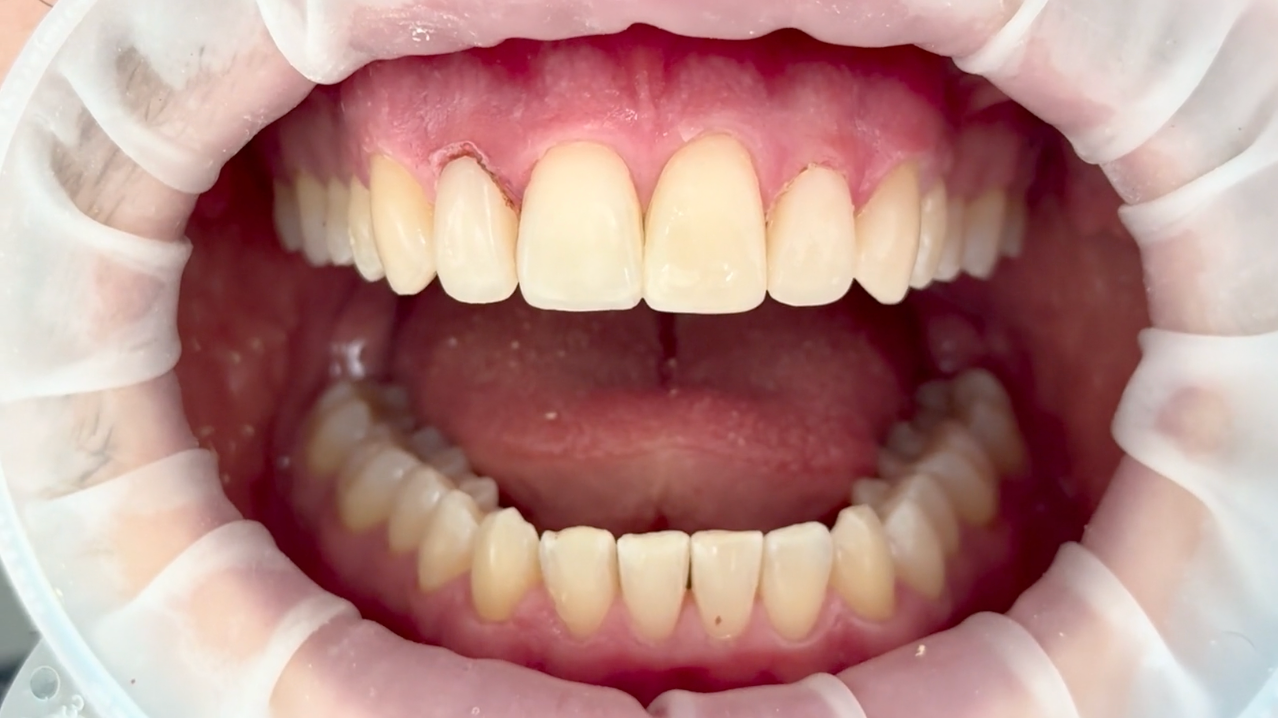
 Fig. 1 — Intraoral photograph, smile, and initial occlusal images
Modern aesthetic dentistry is increasingly oriented toward minimally invasive approaches capable of combining high quality esthetic and functional outcomes with maximum preservation of dental tissues. However, economic sustainability and treatment duration often represent a concrete barrier to access to care. In this context, protocols that integrate pre prosthetic tooth movement using clear aligners with Invisalign ART and direct additive restorative techniques, such as the Flow Injection Technique, represent a clinically valid and predictable alternative to indirect rehabilitations. The preliminary alignment phase aims to improve esthetics and function, allowing for a more conservative restorative approach.
Clinical case
The patient, a 27 year old male, presented with the request to improve the esthetics of his smile (Fig. 1). After causal therapy and motivation for domiciliary oral hygiene, a shared treatment plan was selected. This included targeted tooth movement of the maxillary anterior sextant (13 to 23) to optimize the position of the teeth for direct composite restorations, and of the mandibular anterior sextant (33 to 43) to improve incisal alignment. At the end of treatment, stabilization was planned using two removable Vivera retainers.
 Fig. 2 — Initial facial photograph, True Smile Photo of the alignment simulation with restorations, and ClinCheck Invisalign ART
Design and pre visualization
The success of a synergistic treatment that combines tooth movement and aesthetic restoration is closely linked to the precision of the initial planning. Collaboration between the clinician, the Idi Makers team of Idi Evolution, and Align Technology enabled an integrated digital workflow. Idi Makers produced the diagnostic wax up using exocad ART, defining the future aesthetic and functional rehabilitation. The ClinCheck treatment plan was then developed based on the prosthetic project, planning tooth movements aimed at the definitive rehabilitation (Fig. 2). This integration enabled creation of a complete treatment pre visualization through True Smile Photo integrated with True Smile Video, based on the actual diagnostic wax up, which allows dynamic visualization of the smile during phonation, increasing the patient’s emotional involvement and realistic perception of the final outcome.
 Fig. 3 — Intraoral photograph, smile, and occlusal views after alignment
 Fig. 4 — Design of the definitive restorations with intraoral scans and facial scan on exocad
Treatment
The initial phase involved tooth movement using Invisalign ART clear aligners for approximately three months, aimed at creating favorable conditions for an additive and minimally invasive restorative approach (Fig. 3). At the end of this phase, more favorable alignment was achieved, with more effective management of spaces and positional discrepancies, optimizing the subsequent restorative planning. New digital intraoral scans were performed, integrated with a three dimensional facial scan for complete aesthetic and functional planning (Fig. 4). The acquired data were used to design the restorations using the Flow Injection Technique. In addition, during the planning phase, a selective gingivectomy was planned on teeth 12 and 22 to harmonize the gingival papillae.

Fig. 5 — Surgical stent for gingivectomy and phases of the Flow Injection Technique, with final result
Based on the digital project, a surgical stent was fabricated to guide the gingivectomy and a silicone stent for execution of the Flow Injection Technique using the Idi Evolution whitebox (Fig. 5).
 Fig. 6 — Intraoral and facial photographs of the patient after soft tissue healing

The final documentation shows good healing of the soft tissues and a harmonious aesthetic outcome consistent with the initial planning (Fig. 6).
Conclusions
The presented case demonstrates that the integration between targeted tooth alignment and direct additive restorative techniques represents the optimal solution due to its predictability and economic sustainability. The prosthetically guided digital workflow reduces restorative invasiveness while improving the final aesthetic and functional outcome. Furthermore, pre visualization tools enhance communication, informed consent, and adherence to the treatment plan.
Share: