


Invisalign ART (Advanced Restorative Treatment), the results of the Italian pilot project, and the configuration of the laboratory of the future were presented.
IDI Evolution participated in Exocad Insights 2026, the global event dedicated to innovation in digital dentistry organized by Exocad (an Align Technology company), held in Palma de Mallorca.
The 2026 edition, titled “Calling All Heroes,” brought together nearly 900 professionals—including dental laboratories, clinicians, and industry experts—from 53 countries, once again confirming its role as a key international reference point for exploring the future of digital dentistry across clinical education, technology, and new models of collaboration.
Within this context, IDI Evolution was invited by Align Technology to present on the international stage, delivering a concrete and already operational vision of industry transformation. At the center of the presentation, titled ART – Accelerating Remarkable Transformation Together, was the introduction of Invisalign ART (Advanced Restorative Treatment), a model that redefines the integration between orthodontic alignment and prosthetic workflows within a fully digital ecosystem.
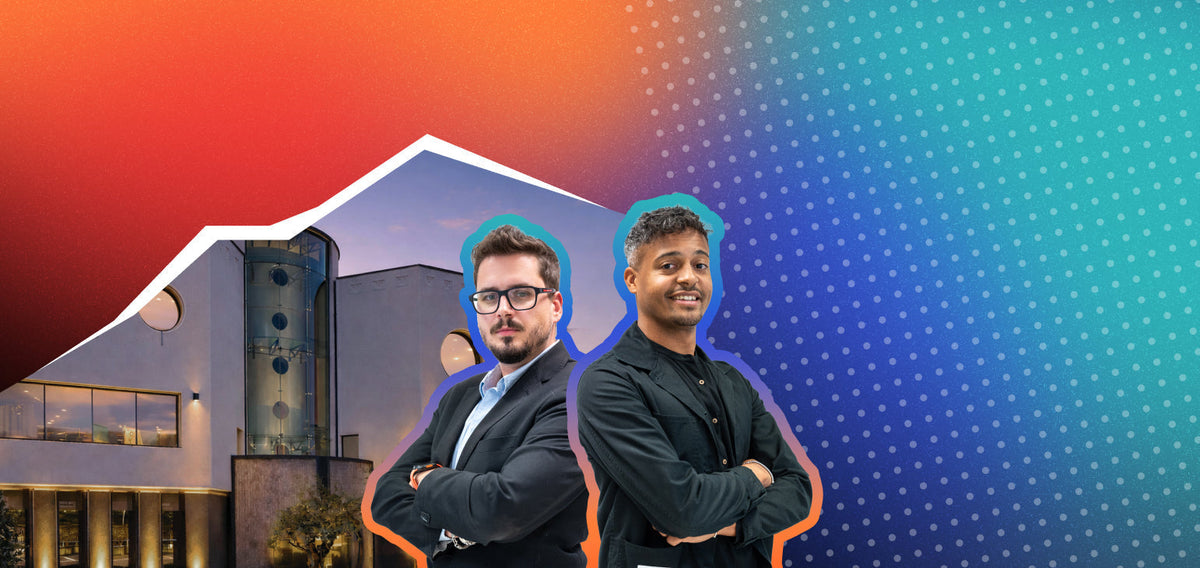
Representing the company were Andrea Piantoni, Chief Executive Officer, and Massimiliano Rossi, Strategic Lead, together with the clinical contribution of Dr. Federico Arosio (all three pictured).
IDI Evolution’s presentation provided an opportunity to demonstrate to the international audience how the laboratory of the future is already a reality, as exemplified by IDI Makers (https://www.idievolution.it/products/idi-makers-protesi): an integrated ecosystem that connects technologies and expertise, enabling an advanced digital workflow. In particular, the integration between Invisalign ART, Exocad ART, and iTero Lumina was illustrated, demonstrating how these solutions can operate in synergy to make pre-prosthetic alignment scalable and predictable.
Within this framework, a clear paradigm shift emerged: the dental laboratory, which in recent years had progressively lost centrality, is now regaining its role by becoming a strategic partner within the value chain. No longer a mere executor, it evolves into an integrated hub contributing to treatment planning, communication, and overall clinical success.
This transformation is reflected in clinical practice, where general practitioners are already generating prosthetic cases involving tooth movement. It is estimated that 75% of adult patients require alignment, that 45% of restorative treatments should begin with an alignment phase, and that 60% of patients would accept this type of treatment if properly proposed. In this context, Invisalign ART enables general practitioners to deliver structured and scalable pre-prosthetic alignment treatments.
Finally, the presentation highlighted how the integration between clinical practice and laboratory workflows, enabled by the IDI Makers model, significantly improves operational efficiency, increases team engagement, and enhances patient awareness and active participation throughout the treatment journey.
“Being invited by Align Technology to present our experience on an international stage of this level is an important recognition for us,” stated Andrea Piantoni, Chief Executive Officer of IDI Evolution, “with Invisalign ART and the IDI Makers model, we are demonstrating that the laboratory of the future is not a vision, but a reality: an integrated ecosystem capable of generating value for clinicians, teams, and patients.”
Through its participation in Exocad Insights 2026, IDI Evolution further strengthens its position within the international digital dentistry landscape, actively contributing to redefining the role of the laboratory within the workflow and advancing new clinical-digital standards focused on growth, integration, and improved patient experience.
Source: Lombardo G, Vena F, Negri P, Pagano S, Barilotti C, Paglia L, Colombo S, Orso M, Cianetti S. Worldwide prevalence of malocclusion in the different stages of dentition: A systematic review and meta-analysis. Eur J Paediatr Dent. June 2020;21(2):115–122. / Data on file at Align Technology, 2017.

Share: