

Cuono Erpete, Matteo Sartori, Alessandro Minniti, Paolo Arosio, Federico Arosio, Salvatore Longoni.
The introduction and development of digital technologies have brought about a turning point in the field of implant-prosthetic rehabilitation, enabling more refined and minimally invasive clinical approaches.
This evolution represents not only a technological advancement, but above all a methodological and cultural transformation that requires increasingly precise, reproducible, and personalized clinical protocols.
Clinical success in implant-prosthetics, in fact, is closely linked to the ability to digitally collect and integrate a vast range of specific patient data.

Tools such as digital photography, intraoral scanning, facial scanning, and cone beam computed tomography (CBCT) enable the creation of complete virtual models. These enable accurate planning of prosthetic rehabilitation and implant surgery, taking into account bone availability, anatomical structures, and individual aesthetic and functional needs.
An in-depth digital diagnosis effectively prevents intraoperative and prosthetic complications, guiding all decisions regarding the type, size and number of implants, the possible need for regenerative or osteoplastic procedures and the optimal timing for the prosthetic phase.
This clinical approach, which takes into account all available data, leads to a significant reduction in tissue trauma, with consequent post-operative benefits in terms of reduced pain, swelling, and acceleration of the healing process.
Furthermore, preoperative virtual simulation allows for more effective communication with the patient, significantly improving understanding of the treatment plan and facilitating its acceptance.
A key element in the biological protection of peri-implant tissues is the choice of dental implants. To ensure long-term stability and success, it is essential to understand the device being used and its surgical and prosthetic indications, so that it can be integrated into the rehabilitation plan to maximize its potential.
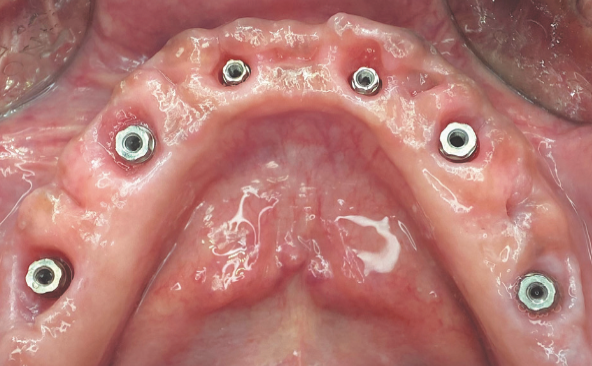
The B1ONE implant (IDI Evolution, MB) is characterized by technological design elements aimed at reducing trauma and preserving crestal bone and soft tissue.
Order Quintessence International 2/2025 here and read our column DENTECHSTRY - The Special on Dental Innovation.



Share: