

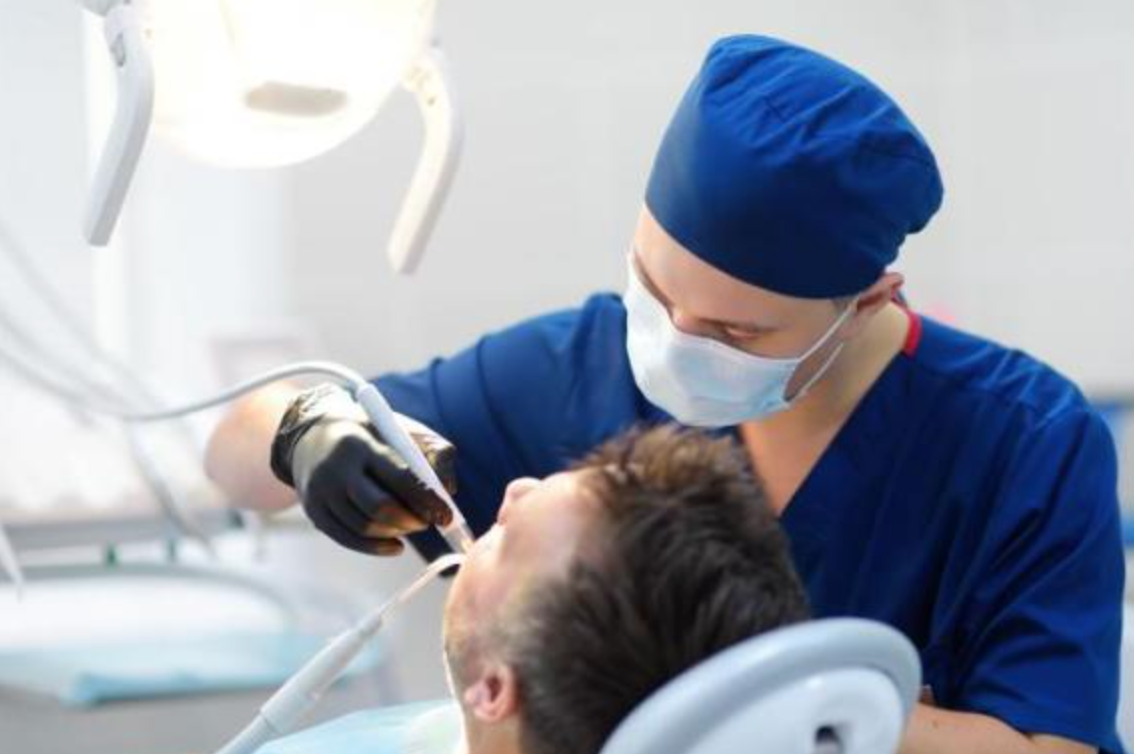
33 percent of Italians are worried that the dentist's estimate will be very expensive and 21 percent fear they won't be able to afford the expense.
While pain during treatment is the biggest fear patients report facing, the fear of financial hardship comes in second. 33% of the sample surveyed by Idi Evolution/Nielsen in fact he is worried that the estimate is very expensive . And 21% will not be able to afford the expense . According to the Rbm-Censis Report (2019), over 90% of dental care in Italy is actually provided by the private sector. The related expenses would be higher than 9.5 billion euros and overall (26%) are those with the greatest impact on Italian families with regards to healthcare expenditure. Many are forced to give up treatment (1 in 4), because they cannot afford it . The economic crisis triggered by the pandemic and the war in Ukraine seems to have accentuated the phenomenon, even if there are some signs of recovery as the same Idi Evolution/Nielsen survey testifies: 49% of those interviewed undergo prevention/check-up visits every 6 months and 30% every year .
Strategies for finding a solution to the cost problem
But the problem remains and There are various strategies to try to resolve it . Prevention , first and foremost. Because, as experts point out, the diseases that dentists deal with most - tooth decay , gingivitis , and periodontal disease - and their respective complications - are pathologies whose causes are well known and easily preventable using appropriate interventions . And then there's the question of care model . The National Health Service provides insufficient responses and so those who can turn to private practices which in fact represent true local medicine.
The answers of the NHS
"Public healthcare is still very limited in terms of numbers and, above all, in the type of services provided, which are primarily focused on emergency situations. Comprehensive treatment plans are not developed, covering every individual patient's needs, as is the case in private healthcare. Access to care is therefore very difficult," emphasizes Claudia Dellavia, president of the Dental Hygiene degree program at the University of Milan. Very few resources are deployed: according to an estimate by the Italian College of Hospital Chiefs of Dentistry, Odontostomatology, and Maxillofacial Surgery (ANPO), in 2021 there were 2,000 outpatient specialist dentists in local health authorities, plus 200 in hospital departments/outpatient clinics. Furthermore, Italian public dentistry requires the provision of a minimum number of services, the type of which is included in the Essential Levels of Assistance (LEA).
The shortcomings of the PNRR and community homes
There's no mention of funding for dentistry in the National Recovery and Resilience Plan. The Dental Register Commissions (CAO) had instead requested that their specialists be present in all community centers and in home care. This request has been strongly supported in Lombardy at the university level, where a project is being implemented: "We would really like pediatric dentistry, in particular, to be structured in such a way as to reach the entire population, perhaps starting at a very early age, around three years old," says Daniela Carmagnola, a researcher in Community Dentistry at the University of Milan.
"This way, we could both capture the family's attention with regard to a series of rules related to eating habits and oral hygiene, and begin to engage the child, who will thus grow up to go to the dentist, and introduce them to the 5-6-year-old visit, which is when sealants are scheduled." The Lombardy Region has approved introducing what it calls "pediatric and social dentistry" into community homes, but it's not yet clear what this will entail.
Andi's project
In Italy, therefore, the lion's share of the cost remains private: today, there are 60,000 practices and 44,611 dentists. "This model has a series of costs, the final sum of which is unfortunately passed on to the patient, plus what should be allocated to the professional," says Carlo Ghirlanda, president of the National Association of Italian Dentists. To address the issue of affordability, Andi is working with several banking groups to develop a dental health insurance plan with a sort of bonus/malus mechanism that will reward patients who are more attentive to their oral health care.
Read the article in Corriere Della Sera.

Share: